An unfilled shift can quickly put pressure on managers, teams and daily operations. A better way to manage open shifts can help close those gaps before they become bigger problems.
Every shift-based business knows the situation. Someone becomes unavailable, a shift is suddenly left open, and a manager has to stop what they are doing to find cover.
One empty slot may not seem significant. But when these gaps happen repeatedly, the pressure starts to spread across the workforce.
Research into Nigeria’s health sector highlights the scale of the problem. One study in southern Nigeria found that 77.7% of health workers had been absent at least once over a year, while another study in northern Nigeria reported roughly 50%. Research has also linked colleague absenteeism among Nigerian health workers with emotional strain and burnout for those left covering the gaps.
Healthcare may be an especially demanding example, but the same principle applies to any shift-based operation: when a shift goes unfilled, someone else usually carries the cost.
An Empty Shift Creates More Than a Scheduling Problem
When a shift remains open, existing employees may have to take on additional work. Service can slow down, overtime can increase, and managers can lose valuable time trying to arrange cover.
The longer the gap remains unresolved, the more difficult it becomes to maintain normal operations.
This is why the speed and reliability of shift coverage matter. Filling the gap quickly can prevent a scheduling issue from becoming an operational one.
Why Calls and Group Chats Are Not Enough
A common approach is to contact employees individually or post a message in a group chat.
It can work, but it often creates unnecessary delays. Some employees may not see the message immediately, while others may respond at different times. Managers can also end up repeatedly contacting the same dependable employees.
There is another problem: the process is difficult to track.
Who agreed to cover the shift? Was the person eligible? Was the change approved? When these details are buried in conversations, finding the right information later becomes much harder.
What Effective Open Shift Management Looks Like
Open shift management changes the process from chasing people for availability to making available shifts visible to eligible employees.
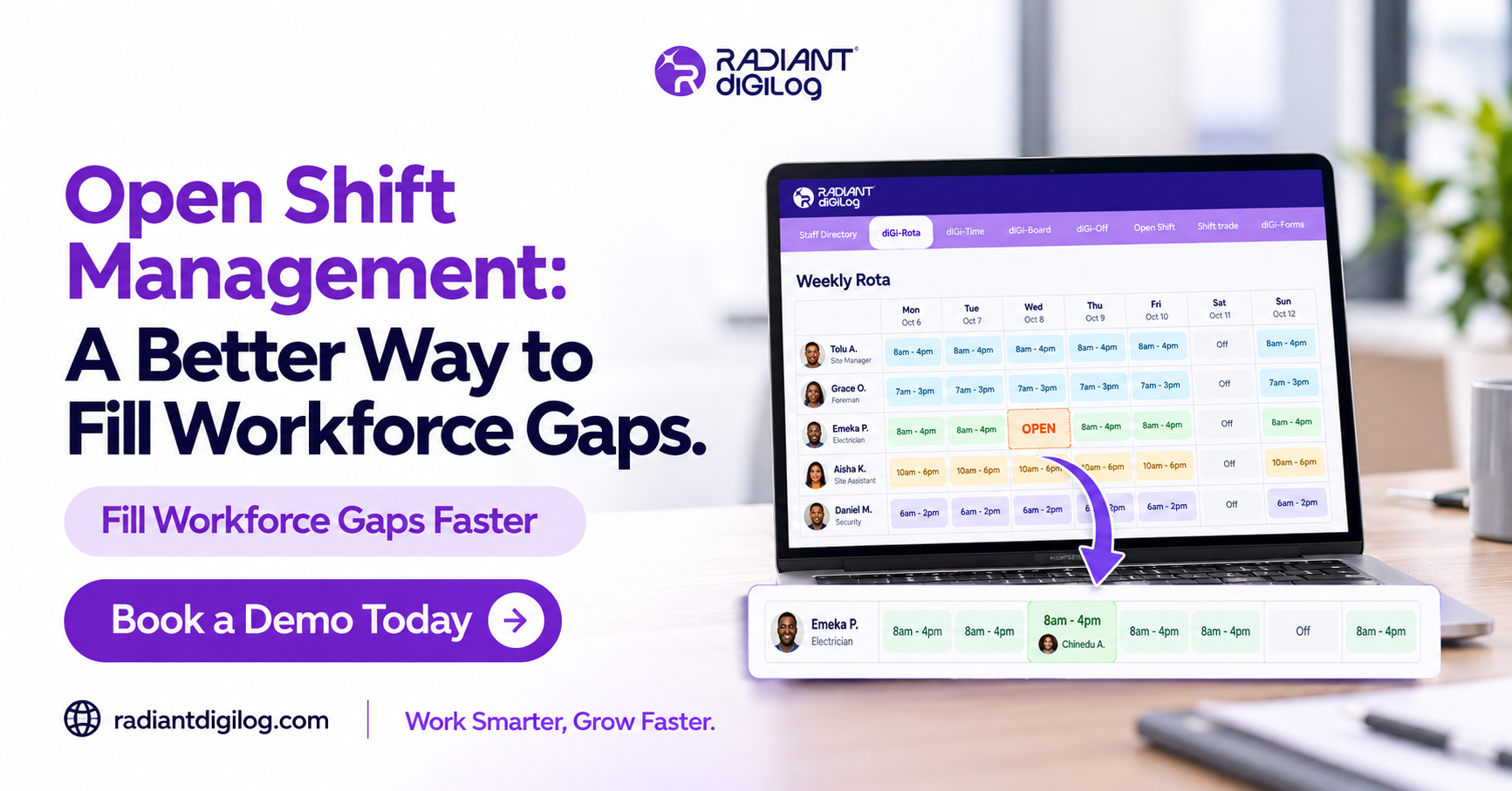
Instead of a manager contacting employees one by one, an open shift can be made available for suitable staff to see and claim.
A useful approach should provide:
- Visibility: Employees can see available shifts, while managers can see which gaps remain open.
- Fairness: Eligible employees have an opportunity to take available shifts instead of relying on the same few people every time.
- Control: Managers can review and approve who takes the shift before coverage is confirmed.
- Accountability: The person covering the shift is recorded as part of the schedule.
This creates a more organised way to respond when staffing plans change.
Making Open Shifts Part of the Scheduling Process
Open shift management works best when it is connected to the rest of the rota rather than treated as a separate activity.
If staff availability, approved leave and open shifts are all managed separately, managers still have to piece information together manually.
A connected scheduling system brings these elements into the same workflow. Radiant diGiLog’s diGi-Rota supports open-shift management alongside recurring shifts and staff availability, while giving managers visibility of coverage across teams and locations.
The result is a more straightforward process: identify the gap, make the shift available, confirm coverage and keep the rota up to date.
For businesses managing shift-based teams, that can mean less time spent chasing replacements and more time focused on keeping operations running.